 By dispatcheradmin
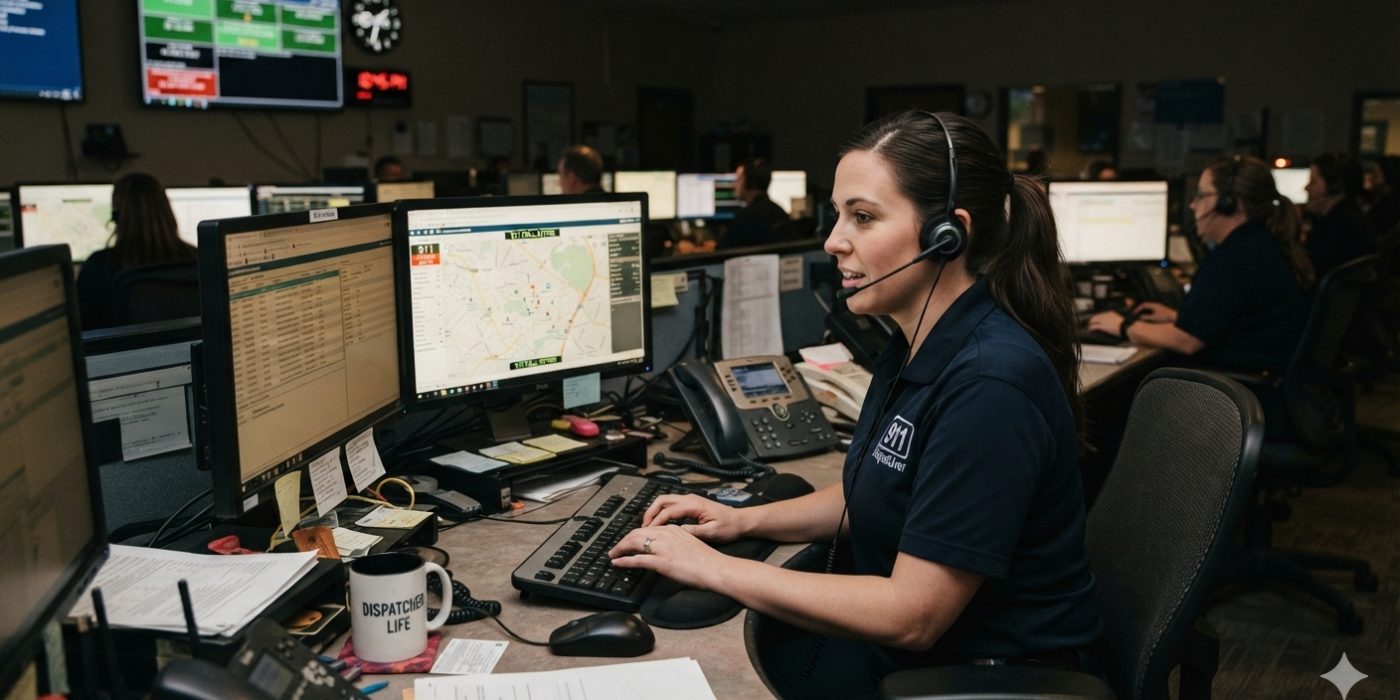
How to Become a 911 Dispatcher: Requirements, Training, Salary & Career Guide
If you are interested in becoming a 911 dispatcher, you may be thinking what qualifications you need, how the hiring process works, how much dispatchers earn, and what the training would be. Here I am giving you all this information, and when you finished this article, you got every thing you want to know about 911 and 911 dispatcher.
First of all, remember, You do not need a four-year college degree to enter this career. According to the U.S. Bureau of Labor Statistics (BLS), public safety communicator typically need a high school diploma or equivalent and receive moderate term on arrival training. However, requirements can vary considerably between states, cities, and individual 911 agencies.
This guide explains the path to becoming a 911 dispatcher in the United States and what you should expect before applying.
What Does a 911 Dispatcher Do?
A 911 dispatcher, works in an emergency communications center and public safety answering point (PSAP).
The job involves receiving emergency and non emergency calls, gathering important information, entering information into computer systems, and communicating with police, fire or other emergency personnel.
Depending on the Rescue Emergency services/ Agency one person may handle both call taking and dispatching, But we see in many countries and services, they separate those responsibilities One for taking call, next for dispatching.
The National 911 Program describes communicators as an important first point of contact during emergencies. They gather essential information, communicate with callers, and help send the appropriate respondents to the correct location. This play a very important role in emergency situation.
Do We Need a College Degree to Become a 911 Dispatcher?
No,
The entry education listed by the BLS for communicators is a high school diploma or equivalent. New employees also receive training after being hired.
However, education requirements can different by agency. Some employers may have additional requirements or preferences, so we must always read the official job announcement carefully before applying.
Having additional education or relevant experience may also be useful generall for career advancement.
Basic Requirements to Become a 911 Dispatcher
There is no single nationwide checklist that applies to every 911 dispatcher position.
Requirements are established by states, local governments, and individual agencies. .
But there are some common requirements. That Include
High school diploma or equivalent
Minimum age requirement
Clean background, cleared by Govt investigative agencies
Computer skills
Good communication and listening skills
Ability to work in different shifts, 24 hour availability if required.
Successful completion of Basic required training
Important: These are common requirements but you may need to check the requirements well before applying for a job.
Do 911 Dispatchers Need Certification?
Certification requirements depend on the state and agency you are applying through..
There are different types of emergency communications roles and certifications. The National 911 Program notes that some professionals are certified as emergency medical dispatchers (EMDs), emergency fire dispatchers (EFDs), or emergency police dispatchers (EPDs), Emergency Disaster Dispatchers EDDs. As by the name it is clear that 911 Dispatcher will dispatch the specific rescuers and police personal to specific emergencies..
What Skills Do We Need?
There are some basic requirements, which you should possesses before applying, but You do not need to be perfect before applying. Many skills can improve through Basic training and field experience.
Some of the most important skills include:
1. Communication
You need to communicate politely and clearly with callers and emergency personnel.
A caller may be confused, frightened, angry, injured, even unable to provide information in proper way. The dispatcher needs to ask useful questions with tricks and expertise and communicate important information accurately.
2. Listening
Good listening is very important.
A 911 dispatcher may need to identify Emergency nature, location, names, injuries, weapons, or other important details while the caller is speaking quickly.
3. Multitasking
911 Dispatchers often have to handle several tasks at the same time.
They may listen to an Emergency caller,while remain calm, enter information into a computer system, communicate with rescuers, monitor communication traffic, and follow established procedures.
4. Typing and Computer Skills
Though the call record is also auto saved, But Typing speed and accuracy matter because 911 dispatchers enter call information into computer systems while communicating with callers and rescuers.
5. Decision Making
Dispatchers work with established procedures, But in each emergency the situation remains different, the dispatcher must determine what information and response are appropriate for a particular situation.
6. Staying Calm
Emergency calls are always intense . A dispatcher needs to communicate politely, professionally and he should continue gathering information.
Do We Have to Take a 911 Dispatcher Test?
The states or organization use an examination Testing agencies during the hiring process.
The test depends on the employer.
A test may evaluate abilities of a candidates who wish to be a 911 Dispatcher, such as:
Listening
Passion
Typing
Memory
Multitasking
Decision making
Following instructions
The BLS specifically notes that candidates must pass an exam and typing test, although hiring requirements may be different in different region of the country.
Practice typing accurately, If you are preparing for a dispatcher test, while maintaining Typing speed. Also practice listening, reading quickly, and working with multiple pieces of information at once.
Background Investigation
Because 911 dispatchers handle and hold sensitive emergency information and work closely with country various agencies, the hiring process may include background investigation.
Candidates may be required to pass a background check and could also face additional screening such as drug testing, a polygraph examination, also hearing and vision tests.
911 Dispatcher Training
Different states may have different approach towards Training of the 911 Dispatcher.
The BLS states that public safety communicators typically receive training after appointment and that training requirements and length may be different in different states.
Training can cover subjects such as
Call processing
Emergency communications technology
Wireless communications
Local Mapping
Organization policy and rules
Emergency response
Legal concepts
Communication skills
Stress management
Quality assurance
The National 911 Program released updated Guidelines for Training in June 2026.
But one thing to remember, These guidelines are not the nation wide legal requirements.
911 Dispatcher Training Duration
One question but many answer.
Totally depend on the situation. Different time duration in different states and different agencies approach differently. .
Your actual training timeline will depend on the state, agency, position, and type of dispatching work.
911 Dispatcher Salary
According to the latest info, the median annual wage for public safety communicators is $53,040 currently, or $25.50 per hour.
Pay can be also different significantly based on location, employer, experience, shift, and other factors. The Dispatcher whose duty station are in harsh area receive Bonus.
If you are comparing salaries, look at the official job postings where you actually plan to apply.
What Are the Work Hours Like?
911 centers operate around the clock because emergencies do not follow normal business hours.
Dispatchers may work:
Day shifts
Evening shifts
Night shifts
Double Shift
Weekends
Holidays
Extended shifts
The BLS reports that public safety communicaters commonly work full time and often work 8- to 12-hour shifts.
Your schedule will depend on the agency and its staffing system. The Dispatcher also perform duty in buddy.
911 Dispatcher job Difficulties
Dispatchers may deal with emergencies involving RTAs, violence, accidents, fires, Medical emergencies, Disaster emergencies, Deep Well Rescue, Drowning emergencies or other serious situations. They must continue following procedures and communicating clearly even when a caller is extremely distressed.
The BLS notes that the work can be stressful because communicators may handle long shifts, many calls,disturbing and fake calls and also troubling situations.
At the same time, the work is meaningful because dispatchers play an important role in connecting people with emergency assistance. The whole process from dispatching to the response depends on how the dispatcher handle the job.
Before applying, it is worth learning about the actual working environment of the organization you are considering.
A Simple Road map to Becoming a 911 Dispatcher
Follow the Basic instruction:
Step 1: Check your eligibility
Look at the minimum requirements for the job.
Step 2: Improve your typing and computer skills
Practice accurate typing speed and become comfortable working with computers.
Step 3: Research local agencies
Find police departments, sheriff’s offices, fire departments, emergency communication centers, Medical hot spot and other agencies that employ public safety communicators.
Step 4: Read the job announcement carefully
Look for minimum education, minimum age, testing, certification, Apply deadline and other requirements.
Step 5: Apply
Submit your application on time and all required documents.
Step 6: Complete testing
Be prepared for typing, computer, aptitude, or other employment assessments.
Step 7: Complete background screening
Follow the agency’s instructions for its background investigation and any other required screening.
Step 8: Complete the interview
Prepare to explain why you want the job and demonstrate your communication, judgment, and ability to remain professional.
Step 9: Complete required training
If hired, complete the required classroom and training.
Step 10: Begin working independently
After completing the required training and probation period, you may move into regular communicator duties, depending on the org.
Questions to Ask Before Applying
Before applying for a 911 dispatcher position, consider asking the hiring agency:
How much education is required?
Is experience required?
Is there a typing test?
What type of employment test is used?
Is certification required before hiring?
Does the org provide training?
How long does training usually take?
How long is the probation period?
What shifts are available?
Duty hours?
What is the starting salary?
Are overtime opportunities available?
What benefits are offered?
Getting answers directly from the org can help you understand what the job actually requires.
Frequently Asked Questions.
Can I become a 911 dispatcher with a high school diploma?
Yes.
Do I need experience in law enforcement?
No, Not necessarily.
Do 911 dispatchers get training?
Yes.
911 dispatcher Salary?
25$ / Hour.
Do all 911 dispatchers have the same requirements?
No.
Conclusion
Becoming a 911 dispatcher does not normally require a four-year college/university degree, but the job requires strong communication, listening, typing, computer, multitasking, and decision making skills.
There is no single hiring process for every 911 center. Requirements, testing, training, pay, and Duty schedules can be differant.
If you wish to become a dispatcher, Stay with us, we will keep you updated about the recruitment process and when the jobs will be announced. s
Official Sources of informations.
National 911 Program — Recommended Minimum Guidelines for Initial Public Safety Telecommunicator Training
National 911 Program — communicaters & Training
U.S. Bureau of Labor Statistics — Public Safety Telecommunicators