 By dispatcheradmin
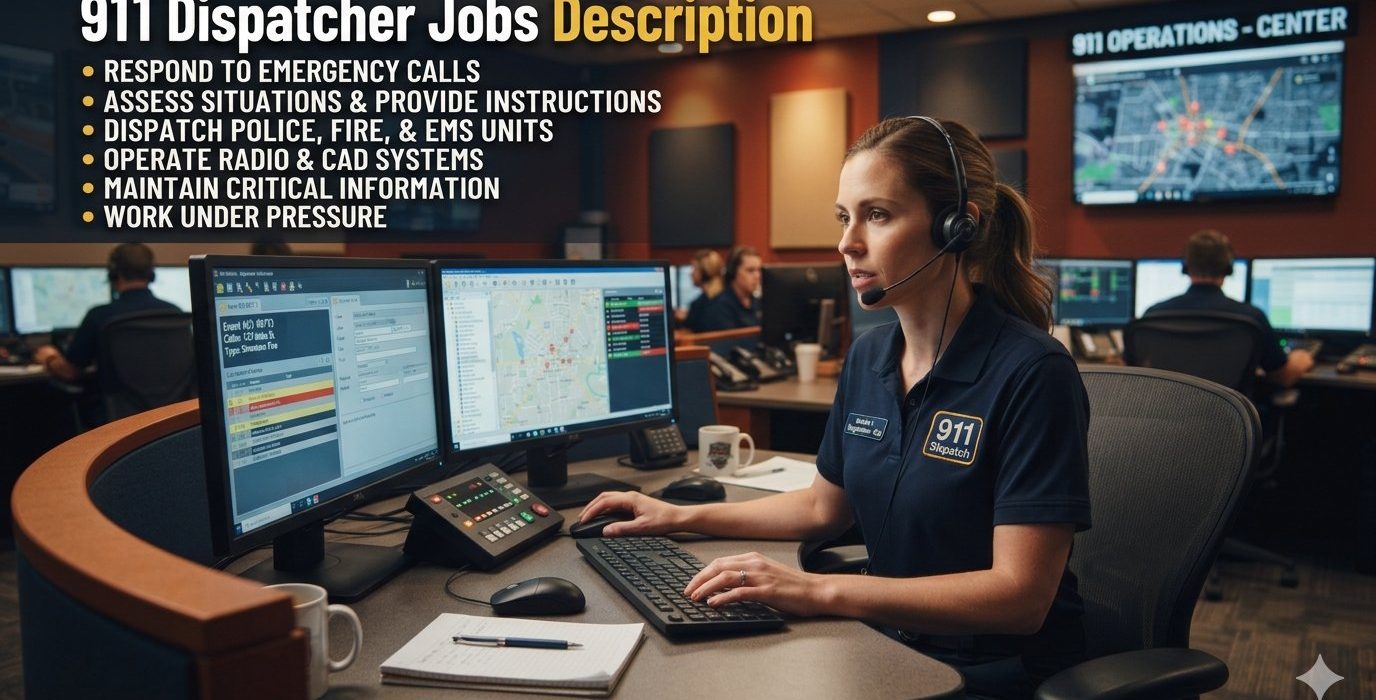
When we talk about 911 Dispatcher Job Description, We start with A 911 dispatcher is one of the first people involved when someone in need calls for emergency help. Dispatchers answer calls, collect important information, determine what type of assistance is needed, and communicate with police, fire, emergency medical services or any other responding team.
The job involves much more than simply answering a phone. Dispatchers must listen carefully, work quickly, use computer and radio communications systems, and remain focused while dealing with stressful situations.
The exact duties can vary between agencies, but the basic role is similar across many public safety communications centers.
What Does a 911 Dispatcher Do?
A 911 dispatcher receives emergency and non-emergency requests and helps connect people with the appropriate emergency services.
Typical responsibilities can include:
- Answering 911 and other emergency calls
- Asking callers for their location and information about the emergency
- Determining what type of response is needed
- Sending police, fire, or emergency medical personnel
- Communicating information to responding units
- Monitoring radio communications
- Entering and updating information in computer systems
- Keeping accurate records of calls and incidents
- Giving callers instructions when agency procedures allow
- Tracking the status of emergency units
The U.S. Bureau of Labor Statistics describes public safety telecommunicators as workers who answer emergency and non-emergency requests, determine the appropriate response, relay information to first responders, coordinate emergency personnel, and keep records of calls.
911 Dispatcher vs. 911 Operator
The terms 911 dispatcher and 911 operator are often used interchangeably, but agencies can organize their communications operations differently.
A 911 operator may primarily focus on answering and processing emergency calls, while a dispatcher may be responsible for sending and communicating with responding units.
Some agencies combine these responsibilities into one position. The federal occupational classification Public Safety Telecommunicators includes job titles such as 911 Dispatcher, 911 Operator, Police Dispatcher, Public Safety Dispatcher, and Telecommunicator.
Because job titles and responsibilities vary, applicants should always read the specific job description provided by the agency.
Daily Duties of a 911 Dispatcher
A typical shift can involve several tasks happening at the same time.
A dispatcher may need to:
Answer emergency calls
The dispatcher listens to the caller and quickly gathers essential information, including the location and nature of the emergency.
Determine the appropriate response
Dispatchers use agency procedures to determine what type of emergency response is required and how quickly it should be sent.
Communicate with first responders
Information from the caller is passed to police officers, firefighters, paramedics, or other emergency personnel.
Use computer and radio systems
Modern dispatch centers use computer-aided dispatch systems, mapping tools, databases, telephones, and radio communications equipment.
Keep records
Important information about calls, dispatches, and communications must be recorded accurately.
Monitor emergency units
Dispatchers may track police, fire, and ambulance units and communicate with them while they are responding to incidents.
These responsibilities are also reflected in the federal O*NET occupational profile for Public Safety Telecommunicators.
Skills Needed to Become a 911 Dispatcher
A successful dispatcher needs more than fast typing.
Important skills include:
- Active listening — understanding callers even when they are frightened or difficult to understand.
- Communication — giving and receiving information clearly.
- Multitasking — handling calls, computers, radios, and other information at the same time.
- Decision-making — determining the appropriate response according to established procedures.
- Typing and computer skills — entering information accurately while communicating with callers and responders.
- Attention to detail — small mistakes can affect how an emergency is handled.
- Emotional control — remaining focused during difficult or stressful calls.
- Empathy — treating callers respectfully while collecting the information needed to send help.
The BLS specifically identifies communication, decision-making, listening, multitasking, empathy, and typing skills as important qualities for public safety telecommunicators.
Where Do 911 Dispatchers Work?
Most 911 dispatchers work in emergency communications centers known as Public Safety Answering Points (PSAPs).
Some centers handle police, fire, and emergency medical calls together, while others may specialize in particular services or jurisdictions.
Because emergencies can happen at any time, dispatch centers operate around the clock. Dispatchers may therefore work evenings, weekends, holidays, and extended shifts.
Is Being a 911 Dispatcher Difficult?
The job can be demanding because dispatchers regularly deal with emergencies and people who may be frightened, injured, or under extreme stress.
At the same time, the work can be meaningful for people who want to help others and work in public safety.
The job also requires concentration. A dispatcher may have to listen to a caller, enter information into a computer, communicate with responders, and monitor radio traffic during the same incident.
What Qualifications Do You Need?
Requirements vary by state, agency, and position.
In the United States, public safety telecommunicators typically need a high school diploma or equivalent, followed by agency or jurisdiction-specific training. Some states and localities also require certification. Candidates may also have to pass examinations, typing tests, background checks, or other screening requirements.
Before applying, always check the requirements listed by the specific agency.
Final Thoughts
A 911 dispatcher plays a central role in emergency communications. From answering calls and gathering information to coordinating with police, fire, and medical responders, dispatchers help move critical information from the public to the people who can respond.
If you’re considering this career, learning about 911 dispatcher requirements, training, testing, typing skills, and interview questions can help you understand what to expect before applying.
At 911 Dispatcher Guide, we’re building resources to help future dispatchers understand the career, prepare for testing, and learn how emergency communications work.