 By dispatcheradmin
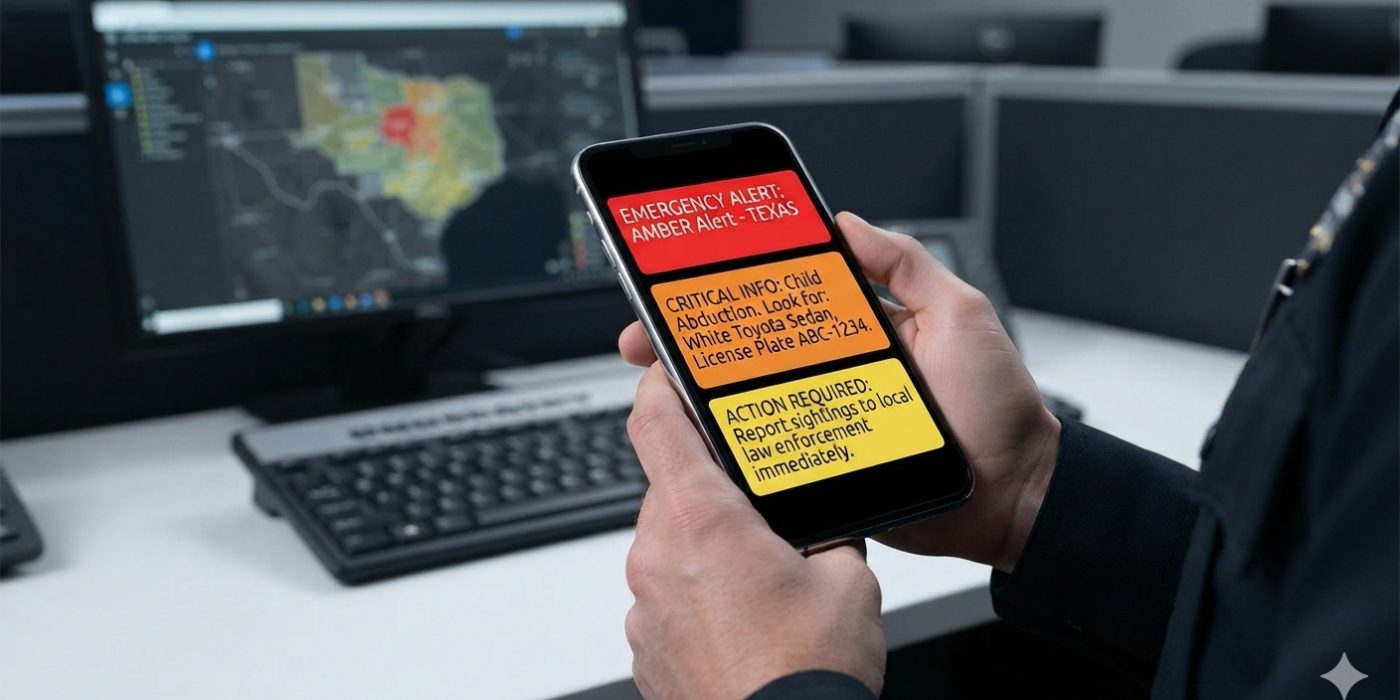
When an emergency happens, getting the right information to people quickly can make a real difference. Emergency alert codes help public safety agencies communicate important warnings about situations such as missing people, dangerous suspects, active shooters, and other serious threats.
These alert programs can differ from one state or local area to another. Across the United States, federal systems such as FEMA’s Integrated Public Alert and Warning System (IPAWS) help authorized agencies distribute alerts through systems including Wireless Emergency Alerts (WEA) on compatible mobile phones and the Emergency Alert System (EAS) used by radio and television broadcasters.
Common Emergency Alert Codes Explained
You may have already received one of these alerts on your phone or seen one reported on television. Here are some common emergency alert programs:
- AMBER Alert: Used for qualifying child abduction cases when authorities believe the child is in serious danger and specific alert criteria are met.
- Silver Alert: Used in participating jurisdictions to help locate missing older adults, often involving people with cognitive impairments such as dementia or Alzheimer’s disease.
- Blue Alert: Used to notify the public about certain situations involving law enforcement officers, such as an officer who has been seriously injured or killed and a dangerous suspect who may still be at large.
- CLEAR Alert: A Texas alert program designed to help locate certain missing or endangered adults who do not qualify for an AMBER Alert or Silver Alert.
- Endangered Missing Person Alert: Used by participating jurisdictions to help locate missing people who may be in immediate danger.
- Active Shooter Alert: Can warn people in an affected area about an active shooter and provide instructions intended to help them stay safe.
- Power Outage Alert: Some jurisdictions use emergency alert systems to provide information about major or dangerous power outages.
The important thing to remember is that emergency alert programs are not identical across the country. States and local jurisdictions can have different names, requirements, and procedures.
For example, the Texas Department of Public Safety currently lists AMBER, Silver, Blue, Endangered Missing Persons, CLEAR, Power Outage, and Active Shooter among its statewide alert programs.
What Information Does an Emergency Alert Provide?
An emergency alert is designed to give you important information quickly. Depending on the type of incident, an alert may include:
- The name or description of a missing person or suspect
- A vehicle description, including color, make, model, or license plate
- The general location or area affected by the incident
- Information about the type of emergency
- Instructions such as evacuating or staying indoors
- Information about where to report relevant tips
The exact information depends on the emergency and the agency sending the alert.
For example, a CLEAR Alert points people toward a missing or endangered adult situation, while an AMBER Alert concerns a qualifying child-abduction case.
How Do Emergency Alerts Reach Your Phone?
Emergency alerts aren’t simply sent as ordinary text messages to everyone in a state.
Through IPAWS, authorized federal, state, local, tribal, and territorial authorities can distribute emergency information through different public warning systems. Wireless Emergency Alerts (WEA) can target a specific geographic area, allowing compatible phones in the affected area to receive the warning.
This means you could receive an alert while traveling through an area even if you don’t live there.
What Should You Do When You Receive an Emergency Alert?
When your phone makes that familiar emergency-alert sound, take a moment to read the message.
- Read the entire alert. Don’t dismiss it before checking the important details.
- Check the location. See whether the emergency is in your area or nearby.
- Follow official instructions. If authorities tell you to evacuate or shelter in place, follow those instructions.
- Stay aware of the information provided. Pay attention to descriptions of people, vehicles, locations, or other important details.
- Don’t put yourself in danger. Never try to confront or chase a suspect yourself.
- Report useful information through the provided channel. If you have information that could help, use the contact information included in the alert or follow instructions from local authorities.
Understanding Emergency Alert Systems
Emergency alert codes can seem confusing because the programs and requirements aren’t exactly the same everywhere. However, understanding the basic purpose of these alerts can help you recognize what an alert means when it appears on your phone.
At 911 Dispatcher Guide, we’re building simple resources that explain emergency communications and public safety systems in plain language. You can learn more about individual programs such as CLEAR, AMBER, Silver, and Blue Alerts, as well as other emergency communication topics.
Understanding an alert is the first step toward responding to it appropriately.